
Last updated: 2026-09-23
Kling AI is Kuaishou's AI video generator, used by 100+ million registered users across 224 countries, pairing native 4K output with lip-synced multilingual audio and implicit multi-shot prompting. Its Motion Transfer feature moves a reference video's motion onto a different subject, aimed at filmmakers and social creators making cinematic B-roll.
About Kling AI
Kling AI is built by Kuaishou Technology, a publicly traded Chinese social media company founded in 2011 (HKEX: 1024). Launched in June 2024, Kling reached an annualized revenue run rate exceeding $300 million within about two years, the fastest any AI video product has hit that milestone. In July 2026 the Kling division closed a standalone funding round of roughly $3 billion at an $18 billion valuation, co-led by BlueFive Capital, CPE, Guofang Investment, Tencent and CITIC Securities with Baidu and Alibaba Cloud among more than ten other investors, the largest single financing any AI video model company has raised. China's National AI Industry Investment Fund and CP Robotics added a further $216 million combined on September 3, 2026, at the same $18 billion valuation. HokAI's best AI video generators roundup tracks how that spending compares against rival labs.
Kling 3.0, released in February 2026, is the platform's current flagship version: it introduced native 4K output, lip-synced multilingual audio in five languages, and implicit multi-shot prompting that lets a single long-form prompt become multiple camera angles and cuts without manual segmentation. Motion Transfer lets creators upload a reference video and apply its motion pattern to a completely different subject, a capability no major Western competitor ships natively, though dedicated talking-avatar tools like HeyGen cover lip-synced dialogue on a single static presenter rather than a full moving scene. The platform runs on a proprietary Diffusion Transformer architecture with a 3D VAE that generates audio and video in one unified pass.
Kling targets independent filmmakers, social media creators, product marketers, and agencies that need cinematic-quality B-roll, competing inside HokAI's AI video generation category chiefly against Runway, Pika and Luma AI's Dream Machine. External ELO benchmarking has favored Kling's human-subject realism and lip-sync fidelity over those rival video models as of April 2026. The platform includes text-to-video and image-to-video pipelines, a Kolors model for image generation aimed at the same still-image niche Midjourney serves, and a developer REST API for integration. Product marketers who need finished ad cuts rather than raw clips often pair Kling's output with a repurposing tool like OpusClip or an ad-generation platform like Creatify.
Commercial usage rights are included from Kling's first paid tier, a lower bar than rival video tools that gate commercial use behind pricier plans. Kling suits creators who want fast, high-fidelity human-subject clips more than teams needing a full non-linear editing suite like Descript or a social-cut tool like CapCut, enterprise-grade compliance documentation, or reliable customer support: Trustpilot reviewers rate the platform poorly, citing unanswered support tickets and non-refundable failed generations far more often than praise.
Screenshots
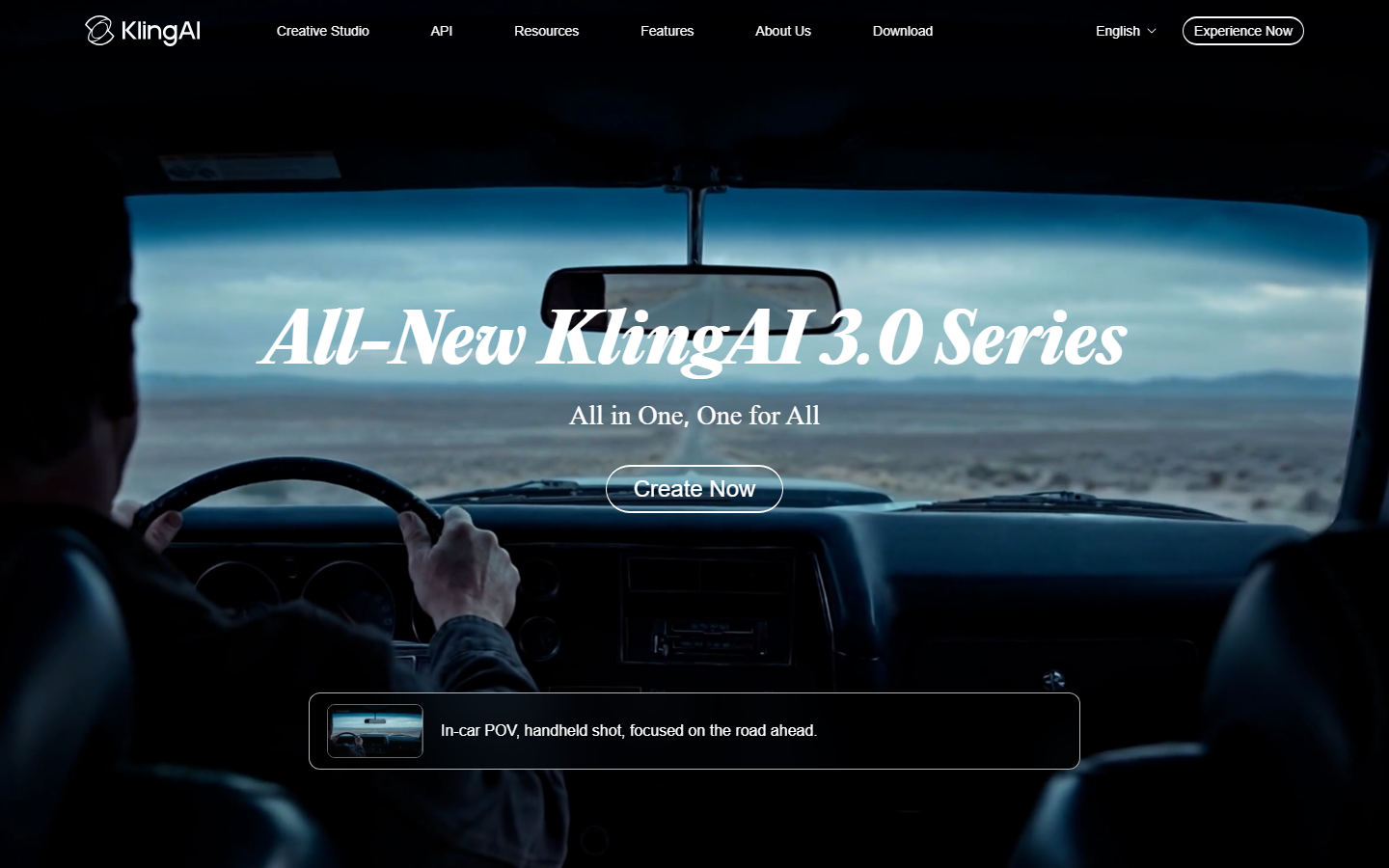
Pricing
Free: 66 credits/day, no credit card required. 99 (26,000 credits) -- roughly 29-30% off the regular monthly rate. 99 (12% off the undiscounted regular price of $10/$37/$92/$180).
72 per month on Standard/Pro/Premier. Commercial rights included from Standard. Credits cost 6/second (720p, no audio) to 12/second (1080p with native audio); native-audio Professional Mode can double the per-second rate.
Failed generations consume credits without refund.
| Tier | Monthly price | What it includes |
|---|---|---|
| Free | Free | |
| Standard | $8.80/mo | |
| Pro | $32.56/mo | |
| Premier | $80.96/mo | |
| Ultra | $159.99/mo |
Feature Comparison by Tier
| Feature | Free | Standard | Pro | Premier | Ultra |
|---|---|---|---|---|---|
| Monthly price (after 1st month) | $0 | $8.80 | $32.56 | $80.96 | $159.99 |
| First-month promo price | — | $6.99 | $25.99 | $64.99 | $127.99 |
| Annual price (per month) | — | $6.60 | $24.42 | $60.72 | $119.17 |
| Commercial usage rights | — | ✓ | ✓ | ✓ | ✓ |
| Credit card required to sign up | No | Yes | Yes | Yes | Yes |
| Daily free credit refresh | 66/day | — | — | — | — |
Key Features
- Native 4K Video Output: Kling 3.0 renders clips at true 4K resolution with 16-bit HDR support, matching the output quality required for professional broadcast and premium social content.
- Multilingual Lip-Synced Audio: Generates synchronized dialogue audio in five languages in a single generation pass, eliminating the need for separate voiceover tools that typically add $50-150 per finished clip.
- Motion Transfer Technology: Upload any reference video and Kling extracts its motion pattern, then applies it to a completely different subject, a feature not natively available in Runway, Pika, or Veo 3.
- Kling 3.0 Turbo: 15-Second Clips at Lower Cost: Kling 3.0 Turbo (launched June 17, 2026) delivers faster generation, lower credits cost, superior lip-sync stability, and up to 15-second clips with full 4K output via the Omni tier. The platform now has 100 million registered users across 224 countries.
- AI Director Multi-Shot Generation (MVL Framework): Kling 3.0 runs on a unified Multi-modal Visual Language framework spanning Video 3.0, Video 3.0 Omni, Image 3.0, and Image 3.0 Omni, with an AI Director mode that composes up to 6 distinct camera shots inside a single 15-second clip while keeping characters and scenes consistent.
- Daily Free Credit Refresh: The free tier renews every 24 hours without needing a credit card, enough for casual testing before committing to a paid plan.
- Commercial Rights at Entry Tier: Commercial licensing is included starting from Kling's entry paid plan, well ahead of rivals like Pika and Luma AI, which require a pricier tier before permitting commercial use.
- Developer API with MCP Support: An official REST API is available at app.klingai.com/global/dev/, and a third-party MCP server enables direct integration with Claude Desktop for AI-to-AI video generation workflows.
Pros
- Tops ELO benchmarks for human face realism, body motion, and lip-sync as of April 2026, outperforming Runway Gen-4, Pika 2.5, and Veo 3 on human-subject video quality.
- The entry paid plan is Kling's cheapest way in, running roughly 40% cheaper per second of generated video than Runway, with commercial rights included from day one instead of gated behind a pricier tier.
- The free tier needs no credit card and refreshes automatically, among the more generous free allowances of any major AI video generator in 2026.
- Multilingual, lip-synced audio ships in the same generation pass as the video, a pairing no Western competitor offers at any price tier, saving a separate dubbing step entirely.
Cons
- Failed generations consume credits without automatic refund, with a 30-40% failure rate on complex prompts that forces creators to budget 2-3x expected credit usage per finished clip.
- No built-in timeline editor, inpainting, or color grading. Every post-production step requires a separate tool, unlike Runway which includes these features inside the same platform.
- Generation times can reach 15 minutes per clip on premium quality settings, slowing iterative workflows versus Runway's Gen-4 Turbo which completes in under 60 seconds.
- Trustpilot rating of 1.2 out of 5 across 386 reviews as of September 2026 (89% one-star), with recurring reports of unanswered support tickets, disputed renewals, and a strict no-refund policy enforced even after failed or technically broken generations.
Data Handling
- Training-data policy
- Kling's privacy policy (kling.ai/docs/privacy-policy) does not state that user prompts or uploaded content are used to train its AI models; it names content moderation, portrait processing and special-effects processing as purposes. Data is stored on servers in Singapore and Malaysia. Retention is stated only as 'for as long as necessary' to provide the service, with no fixed day count published (South Korea accounts get a specific 5-year retention for contract and payment records only).
Frequently Asked Questions
What are Kling AI's pricing plans in 2026?
Standard is Kling's cheapest paid tier at $8.80/month after a discounted first month. Pro renews at $32.56/month, Premier at $80.96/month, and Ultra tops the range at $159.99/month -- each roughly 29-30% cheaper for that first month only. Every tier includes commercial usage rights from Standard onward, and yearly billing lowers the recurring cost further on Standard, Pro and Premier. Failed generations still burn credits with no automatic refund, so budget a little extra regardless of which tier you pick.
Does Kling AI have a free plan?
Yes. Every account gets 66 free credits that refresh daily, and signup asks for no payment details. That covers casual, low-volume generation such as testing prompts or making a couple of short clips, but not an active daily production workflow. Commercial usage rights begin only on a paid plan.
Which tools compete with Kling AI in 2026?
Runway is the strongest pick if you want inpainting, color grading, and camera-path controls built into the same tool as generation. Pika suits quick social-clip effects like Pikaframes and Pikaswaps at a lower monthly cost. Veo 3 from Google matches Kling's 4K output and physics fidelity but needs Google Cloud access rather than a simple consumer signup. Kling itself wins on human-realism benchmarks and price for creators who want lip-synced, multilingual dialogue without enterprise-level rates.
What separates Kling AI from Runway?
Runway ships a full non-linear editor with inpainting, outpainting, camera-path controls, and color grading in one platform, which suits teams that need to edit and iterate without leaving the tool. Kling leads on raw human-realism benchmarks and turns clips around fast per generation, though every failed attempt still burns credits with no refund and finished clips need a separate editor afterward. Kling wins on fidelity per dollar, Runway on keeping the whole job in one place.
What does it take to start using Kling AI?
A free account at kling.ai and a mode: Text to Video, Image to Video, or Motion Transfer. Write a detailed scene description or upload a reference file for the mode you chose, and set resolution, aspect ratio, and clip length before generating. Review the result and download it, or adjust the prompt and generate again.
Top Alternatives
- Runway: Pick Runway if the job needs a built-in editor with inpainting, color grading and camera-path controls, not just raw generation.
- Pika: Choose Pika for fast, low-cost social clips and Pikaframes rather than lip-synced dialogue or 4K output.
- Luma AI Dream Machine: Pick Dream Machine if you want a simpler, faster consumer workflow over Kling's deeper tier and control options.
HokAI guides covering Kling AI
- The Best Free AI for Turning a Photo Into a Video in 2026: Kling, CapCut, HeyGen and Fliki compared for free photo-to-video, checked 22 Sept 2026. See which free tiers actually renew, and which one just quietly stopped.
- Kling AI vs Zorq AI: Direct Model or Anonymous Aggregator?: Kling AI's cheapest plan costs less per credit than Zorq AI's, and comes from a public company. Zorq AI bundles five video models but names no operator.
- Sora's API Shuts Down September 24. Kling Is Winning the Refugees, at a Cost Nobody Prices In.: Sora's API dies September 24, 2026. Kling now prices video at 12 cents a second, but its Chinese ownership carries a legal risk most reviews never mention.
- Best AI Video Generators in 2026: Pick the Category Before You Pick the Tool: Kling AI generates a second of 1080p video for about 13 cents, cheaper than Runway's 23 cents. See how 31 AI video tools split into three buying decisions.
- Creatify vs Kling AI: Which Is Better for AI Video Ads in 2026?: Creatify assembles finished, trackable video ads from product pages; Kling AI generates original footage from a prompt. Real pricing and which to pick first.
- Four Lanes, 95 Guides, and Not One Outside Its Band: HokAI sorts its guides into four lanes: comparison, buyer's guide, news analysis and Inside HokAI. All 95 sit inside the word band their own lane declares.