
Last updated: 2026-08-19
Orthogonal gives AI agents a single key and MCP server that reach 30+ third-party APIs, from B2B data enrichment to web scraping and identity checks, instead of separate signups and OAuth flows for every provider. Each response returns the exact cost of that call, so agents can track spend as they run.
About Orthogonal
Orthogonal is a unified API gateway for AI agents, founded in 2025 by Christian Pickett and Bera Sogut out of Y Combinator's W26 batch. It replaces the usual mess of per-provider signups, API keys, billing accounts, and OAuth flows: agents connect once and reach the full catalog of partner APIs through a single key.
Each API in the catalog ships as a skill that teaches an agent how to call it: authentication, parameters, error handling, and common workflows are bundled in, and the platform manages rate limits, retries, and routing behind the scenes so the agent code stays simple. Every response also returns the exact cost of that call, since billing is metered per request rather than by seat.
Access comes through three surfaces: a hosted MCP server at mcp.orth.sh for Claude Desktop and Cursor, a TypeScript SDK, and a CLI tool called @orth/cli. The catalog itself leans toward B2B and data work: lead enrichment through Apollo.io, People Data Labs, and ContactOut, web scraping via ScrapeGraph, social media data, identity checks through Didit, and productivity connections to Gmail, Slack, GitHub, and Google Drive by way of Composio.
In March 2026 Orthogonal closed a Seed round led by Pioneer Fund. Pickett and Sogut both bring payments and API infrastructure backgrounds, from Coinbase billing, Vercel, and Google's reCAPTCHA and Maps API teams, which shows in how the product treats agent billing as a first-class problem rather than an afterthought.
Screenshots
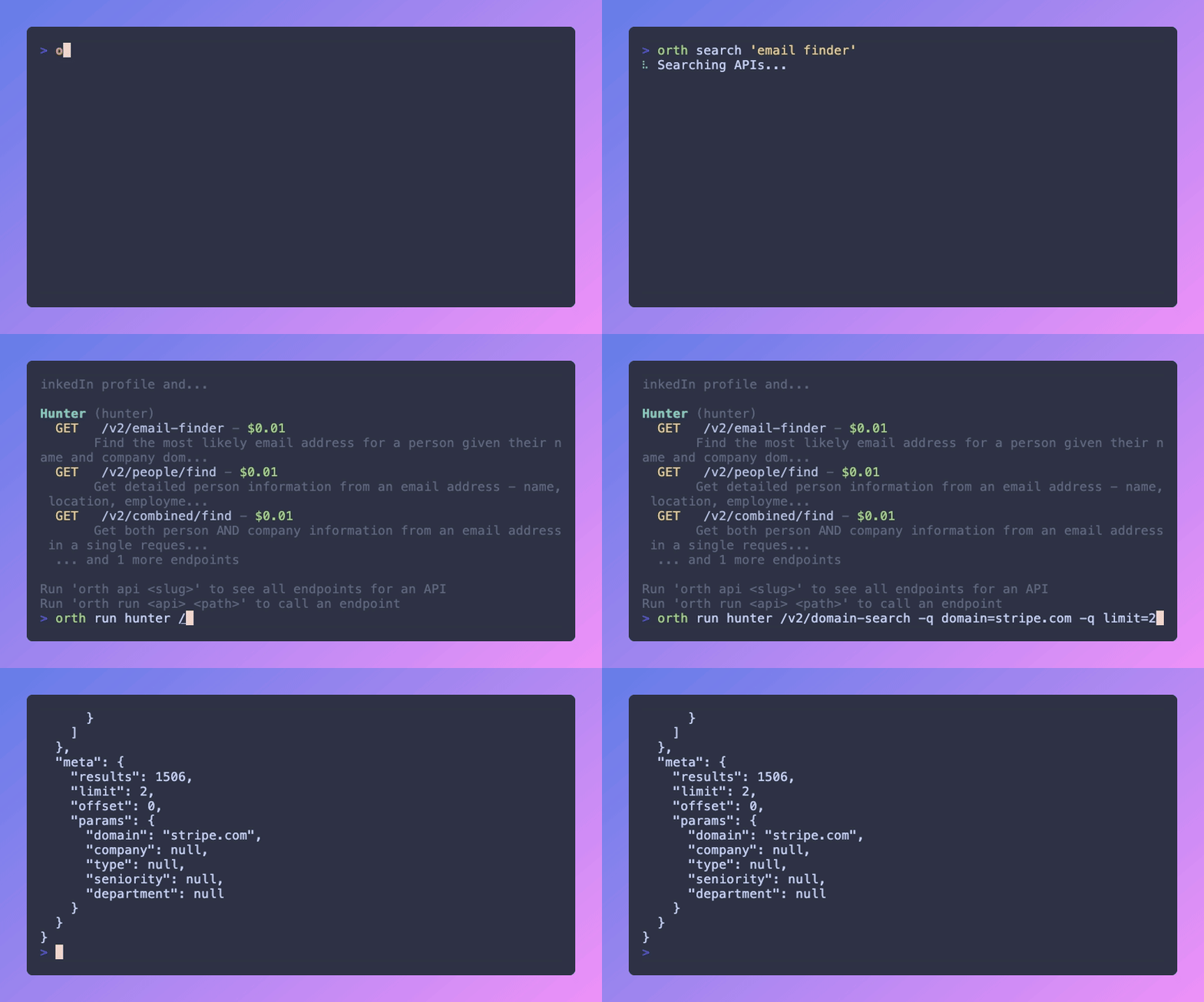
Pricing
Pay-as-you-go with a starter credit grant on signup, no subscription and no monthly minimum. Each API call deducts from the pre-funded balance, and the exact cost of that call comes back in the response. Costs differ by provider since there is no single flat per-call rate.
| Tier | Monthly price | What it includes |
|---|---|---|
| Free Credits | Free | |
| Pay-As-You-Go | Custom |
Key Features
- Single-Key API Access: One Orthogonal key replaces the usual per-provider signup, OAuth flow, and credential storage across every API in the catalog.
- MCP-Native Integration: A hosted MCP server at mcp.orth.sh drops into Claude Desktop or Cursor with a single JSON config entry, no custom wrapper needed.
- Metered Per-Call Billing: Every response carries the exact cost of that call, deducted from a pre-funded balance, so nothing runs on a recurring monthly charge.
- Agent-Ready Skill Catalog: Each catalog entry bundles the auth flow, parameter schema, error handling, and workflow pattern an agent needs, so it can call the API without reading vendor docs.
- Automatic Rate Limiting and Routing: Provider-level rate limits, retries, and routing are handled inside Orthogonal, so agent code never needs its own per-provider retry logic.
- B2B and Productivity Data Reach: The catalog spans lead enrichment (Apollo.io, People Data Labs), web scraping (ScrapeGraph), social data across 20+ platforms, identity checks (Didit), and Composio-powered Gmail and Slack access.
Pros
- Skipping per-provider signup is the biggest draw: one Orthogonal account and key replaces a stack of separate vendor logins, API keys, and billing relationships.
- MCP setup is close to instant: pointing Claude Desktop or Cursor at mcp.orth.sh takes one JSON config block and a restart, not a full integration project.
- Metered per-call pricing means idle agents cost nothing between runs, which reviewers cite as a better fit for spiky or experimental workloads than a flat subscription.
- The founders' payments and API infrastructure background shows up in how carefully the billing and cost-reporting layer is built, not just the API wrapper.
Cons
- There is no public per-call rate card, so developers cannot fully budget agent costs before running real workloads against the API.
- The catalog favors B2B and data APIs; teams needing verticals outside that lane will not find them here yet.
- Orthogonal is a two-person team founded in 2025, a fair question for enterprise buyers who need SOC 2 and long-term support guarantees before approval.
- Unused credit balances sit in a pre-funded account rather than a bank, so teams should check refund terms before loading up a large balance.
Product Information
- Cloud
- Yes
- Self-Hosted
- No
- On-Premise
- No
- Languages
- English
- Training
- Documentation, CLI README, TypeScript SDK examples
Data Handling
- Training-data policy
- Orthogonal is an API gateway and does not operate an AI model or training pipeline. Data handling is governed by each underlying provider's policies.
Frequently Asked Questions
What does Orthogonal actually cost?
Orthogonal runs pay-as-you-go, not subscription: every new account gets $10 in starter credits on signup, then each API call deducts its exact cost from that balance. There is no monthly fee or minimum spend, and every response returns what the call cost so nothing is a surprise later. Per-call rates vary by provider and are not published as a single flat-rate table, so the real number depends on which APIs an agent calls.
Does Orthogonal have a free plan?
Orthogonal is not free indefinitely, but every account starts with the same free credit grant described above, and no card is required to get it. Once that balance runs out, calls simply stop working until the account is topped up. There is no recurring free allowance and no permanent free tier, so cost stays at zero only while the starter balance lasts.
What should you use instead of Orthogonal?
Composio is the closer fit when an agent mainly needs to take actions inside SaaS tools like Slack, GitHub, or HubSpot rather than pull external data. Orthogonal stands apart on billing: agents pay per call from one pooled balance instead of juggling a subscription or API key per vendor.
Orthogonal or Composio: which should you pick?
Composio focuses on pre-built integrations into productivity and SaaS platforms, letting an agent take actions inside tools like Slack, GitHub, or Notion. Orthogonal instead focuses on data access and B2B enrichment, and adds a payment layer so an agent can pay per call with no per-vendor subscription. Teams building GTM or research agents that need contact and company data tend to prefer Orthogonal; teams automating actions inside existing SaaS tools tend to prefer Composio.
How long does it take to get going with Orthogonal?
Claiming the starter credit grant takes under a minute: sign up, no card required, and the balance is ready to spend immediately. Set the API key as an environment variable for direct REST or SDK use, or add the MCP server to a Claude Desktop or Cursor config and restart the client, then browse the skill catalog for whichever APIs the agent needs.
Top Alternatives
- LangChain: LangChain hands over the building blocks to construct a fully custom agent pipeline, with the tradeoff of wiring that pipeline together yourself; Orthogonal skips that assembly step and hands an agent pre-wired, pay-per-call access to dozens of external APIs at once.
- Exa: Exa alone is the right call when web search quality is the entire deciding factor; Orthogonal is worth adding once a project also needs B2B enrichment, scraping, and social data sitting behind the same gateway as that search.
HokAI guides covering Orthogonal
- CometAPI vs Orthogonal: Same Gateway Label, Two Different Jobs: CometAPI and Orthogonal both call themselves a unified AI gateway, but one routes 500+ models and the other gives agents pay-per-call access to 40+ tools.
- Stripe Didn't Just Buy OpenRouter. It Already Owned the Money Underneath It.: Stripe's reported $7B OpenRouter buy isn't new; Stripe became its billing backbone in January 2026. What that means for neutral AI routing, and what to watch.